Maternal Mental Health Conditions and Statistics: An Overview
At the Maternal Mental Health Leadership Alliance, we are committed to curating the latest information in perinatal mental health to help educate healthcare providers, birth workers, and policymakers. Our Topic Fact Sheets Library offers evidence-based fact sheets about maternal mental health and its intersections with different populations. Each fact sheet is researched by our team of public health, public policy, and clinical experts.
PDF VERSION
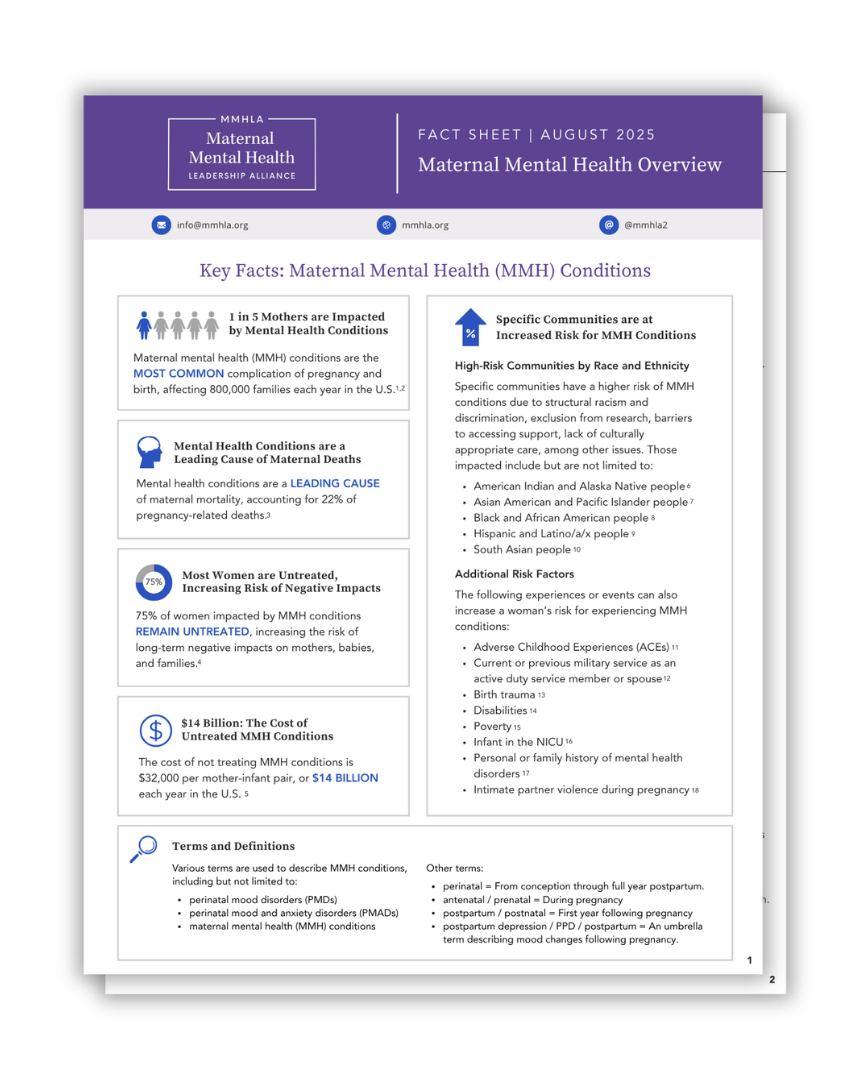
Maternal Mental Health Overview Fact Sheet
Key Facts: Maternal Mental Health (MMH) Conditions
1 in 5 Mothers are Impacted by Mental Health Conditions
Maternal mental health (MMH) conditions are the MOST COMMON complication of pregnancy and birth, affecting 800,000 families each year in the U.S. [1, 2]
Mental Health Conditions are a Leading Cause of Maternal Deaths
Mental health conditions are a LEADING CAUSE of maternal mortality, accounting for 27.7% of pregnancy-related deaths. [3]
Most Women are Untreated, Increasing Risk of Negative Impacts
75% of women impacted by maternal mental health conditions REMAIN UNTREATED, increasing the risk of long-term negative impacts on mothers, babies, and families. [4]
$14 Billion: The Cost of Untreated Maternal Mental Health Conditions
The cost of not treating maternal mental health conditions is $32,000 per mother-infant pair, or $14 BILLION each year in the U.S. [5]
Specific Communities are at Increased Risk for Maternal Mental Health Conditions
High-Risk Communities by Race and Ethnicity:
Specific communities have a higher risk of maternal mental health conditions due to structural racism and discrimination, exclusion from research, barriers to accessing support, lack of culturally appropriate care, among other issues. Those impacted include but are not limited to:
American Indian and Alaska Native people [6]
Asian American and Pacific Islander people [7]
Black and African American people [8]
Hispanic and Latino/a/x people [9]
South Asian people [10]
Additional Risk Factors:
The following experiences or events can also increase a woman’s risk for experiencing maternal mental health conditions:
Adverse Childhood Experiences (ACEs) [11]
Current or previous military service as an active duty service member or spouse [12]
Birth trauma [13]
Disabilities [14]
Poverty [15]
Infant in the NICU [16]
Personal or family history of mental health disorders [17]
Intimate partner violence during pregnancy [18]
Terms and Definitions
Various terms are used to describe maternal mental health conditions, including but not limited to:
perinatal mood disorders (PMDs)
perinatal mood and anxiety disorders (PMADs)
maternal mental health (MMH) conditions
Other Terms:
perinatal = From conception through full year postpartum.
antenatal / prenatal = During pregnancy
postpartum / postnatal = First year following pregnancy
postpartum depression / PPD / postpartum = An umbrella term describing mood changes following pregnancy.
Range, Prevalence, and Symptoms of Maternal Mental Health Conditions
Baby Blues [19]
Up to 85% of childbearing individuals.
Normal period of transition.
Typically include emotional sensitivity, weepiness, and / or feeling overwhelmed.
Likely associated with the significant changes in hormones in the immediate postpartum period.
Resolves without treatment within 2-3 weeks following childbirth.
Anxiety Disorders [19, 20]
6-8% of childbearing individuals.
Feeling easily stressed, worried, overwhelmed, tense.
Panic attacks, including shortness of breath, rapid pulse, dizziness, chest or stomach pain.
Fear of going crazy or dying.
Intrusive or scary thoughts; thoughts of harming self or baby.
Fear of going outside.
Sleep disturbances; difficulty falling or staying asleep, even if baby is sleeping.
Obsessive-Compulsive Disorder [19]
4% of childbearing individuals.
Disturbing, repetitive, intrusive thoughts which may include thoughts of harming self or baby; these thoughts cause the individual great distress (i.e. thoughts are ego-dystonic).
Compulsive behaviors, such as checking, in response to intrusive thoughts or in an attempt to make the thoughts stop or go away.
Substance Use Disorder (SUD) [21]
Often co-morbid.
Most-frequently used substances: tobacco, alcohol, marijuana, cocaine, opioids.
Women are at the highest risk for SUD during reproductive years, especially if access to mental health services is limited.
Most women who use substances often decrease their use during pregnancy. Those who can quit on their own usually do so, which is the distinguishing factor between substance use and SUD.
Depression [19, 20]
14% of childbearing individuals.
Change in appetite, sleep, energy, motivation, concentration.
Negative thinking including guilt, helplessness, hopelessness, worthlessness.
Irritable, angry, rageful.
Lack of interest in the baby.
Low self‐care.
Intrusive or scary thoughts; thoughts of harming self or baby.
Post-Traumatic Stress Disorders [19]
9% of childbearing individuals.
Change in cognition, mood, arousal associated with traumatic events, typically around childbirth.
Avoidance of stimuli associated with the traumatic event.
Feeling constantly keyed up or on guard.
Learn more about birth trauma and PTSD with MMHLA’s Fact Sheet: Birth Trauma and Maternal Mental Health.
Bipolar Disorder [19, 20]
3% of childbearing individuals.
Manic or hypomanic episodes alternate with depressive episodes.
Unusual shifts in mood, energy, activity levels, and ability to carry out day-to-day tasks.
NOTE: Women with bipolar disorder are extremely vulnerable to recurrence during pregnancy and have an increased risk for postpartum depression and psychosis.
Psychosis — MEDICAL EMERGENCY [19, 20]
1-2 women per 1,000 births.
Most significant and least frequent mental health condition occurring during the perinatal period.
Increases the risk of infanticide and/or suicide.
Symptoms include delusions, hallucinations, paranoia, rapid mood swings, cognitive impairment, focus on death, reckless behavior.
Thoughts are ego-syntonic, meaning they do not cause the individual distress.
Onset is sudden, usually within 1-2 weeks following childbirth.
The mother should be under the care of a medical provider or taken to the emergency room for assessment and care.
Learn more with MMHLA’s Fact Sheet: Pregnancy and Postpartum Psychosis.
Timing and Onset of Maternal Mental Health Conditions
40% develop symptoms following childbirth. [22]
33% develop symptoms during pregnancy. [22]
27% enter pregnancy with anxiety or depression. [22]
3-6 months postpartum: Peak onset of maternal mental health conditions. [2]
9-12 months postpartum: Peak incidence of suicide. [23]
3 years postpartum: If untreated, symptoms of maternal mental health conditions can last up to 3 years. [24]
Causes of Maternal Mental Health Conditions
Maternal mental health conditions are caused by a combination of bio-psycho-social factors.
Biological: The dramatic change in hormones during pregnancy and in the immediate postpartum period can have a significant impact on mood. [25]
Psychological: Some individuals struggle with changes in roles, relationships, and responsibilities that come with the transition to parenthood. [26]
Social: The childbearing years often include changes in jobs, homes, and finances that can add stress. External factors, such as isolation during the COVID-19 pandemic, can add to or increase feelings of anxiety or depression. [27]

Consequences of Untreated Maternal Mental Health Conditions
On Mothers
Women with untreated maternal mental health conditions during pregnancy are more likely to: [28, 29]
Have poor prenatal care.
Use substances such as alcohol, tobacco, or drugs.
Experience physical, emotional, or sexual abuse.
Women with untreated maternal mental health conditions postpartum are more likely to: [30]
Be less responsive to their baby’s cues.
Have fewer positive interactions with their baby.
Experience breastfeeding challenges.
Question their competences as mothers.
On Children
Infants born to mothers with untreated maternal mental health conditions are at higher risk for:
Preterm birth, small for gestational size, low birth weight. [29, 31]
Stillbirth. [29]
Longer stay in the neonatal intensive care unit. [32]
Excessive crying. [33]
Untreated maternal mental health conditions in the parent can increase the risk for:
Impaired parent-child interactions. [35]
Behavioral, cognitive, emotional delays in the child. [34]
Adverse childhood experiences. [35]
On Parents
Parents who are depressed or anxious are more likely to: [36, 37]
Make more trips to the emergency department or doctor’s office.
Find it challenging to manage their child’s chronic health conditions.
Not adhere to guidance for safe infant sleep and car seat usage.
Women experiencing maternal mental health conditions might say...
“Having a baby was a mistake.”
“I’m such a bad mother, my baby and family would be better off without me.”
“I’m exhausted but can’t sleep, even when the baby sleeps.”
“I feel like I’m drowning.”
“I’m afraid to be alone with my baby.”
“I want to run away.”
“I’m not bonding with my baby.”
“I was so embarrassed to say that I have postpartum depression out loud. It felt dirty, like it was a contagious disease.”
DID YOU KNOW?
The number one predictor for experiencing a maternal mental health condition is a personal or family history of mental health disorders.
Racial and Cultural Considerations
Increased Risk: Women of color are 3-4 times more likely to experience complications during pregnancy and childbirth and die from these complications than white women. [38]
Intergenerational Trauma: Black women enter pregnancy and childbirth suffering the impacts of intergenerational trauma, including the knowledge that many obstetric and gynecologic procedures were tested on Black women without their consent and without pain medication. [39]
Institutional Racism: Institutional racism in health care settings contributes to Black women receiving lower quality of care – such as giving birth in lower-quality hospitals – as well as being subject to dangerous, demeaning, or humiliating treatment. [38, 39]
Impact on Non-Birthing Parents
Fathers, Partners, Adoptive Parents At-Risk: Non-birthing parents – including fathers, partners, adoptive parents – are also at risk for experiencing mental health conditions related to pregnancy and parenting. [40, 41]
1 in 10 Fathers: As many as 1 in 10 fathers experience postpartum depression, with maternal depression being the #1 predictor of paternal depression. [40]
Grief and Loss: Parents involved in adoption – both the birthing parents and the adopting parents – can also experience strong emotions, including grief and loss. [41]
Barriers to Accessing Care
Feelings of shame, stigma, guilt. [42]
Expense and/or lack of access to healthcare. [42]
Social biases in the healthcare system. [15, 42]
Logistical challenges, such as lack of transportation or childcare. [15]
Distrust of the healthcare system. [42]
Fear that child protective services or immigration agencies will become involved. [43, 44]
Fear of being considered a “bad mom.” [42]
Racial, cultural, and religious beliefs. [42]
DID YOU KNOW?
Women of color and women of low income are MORE LIKELY to experience maternal mental health conditions and LESS LIKELY to be able to access care. [15, 42]
Treatment for Maternal Mental Health Conditions
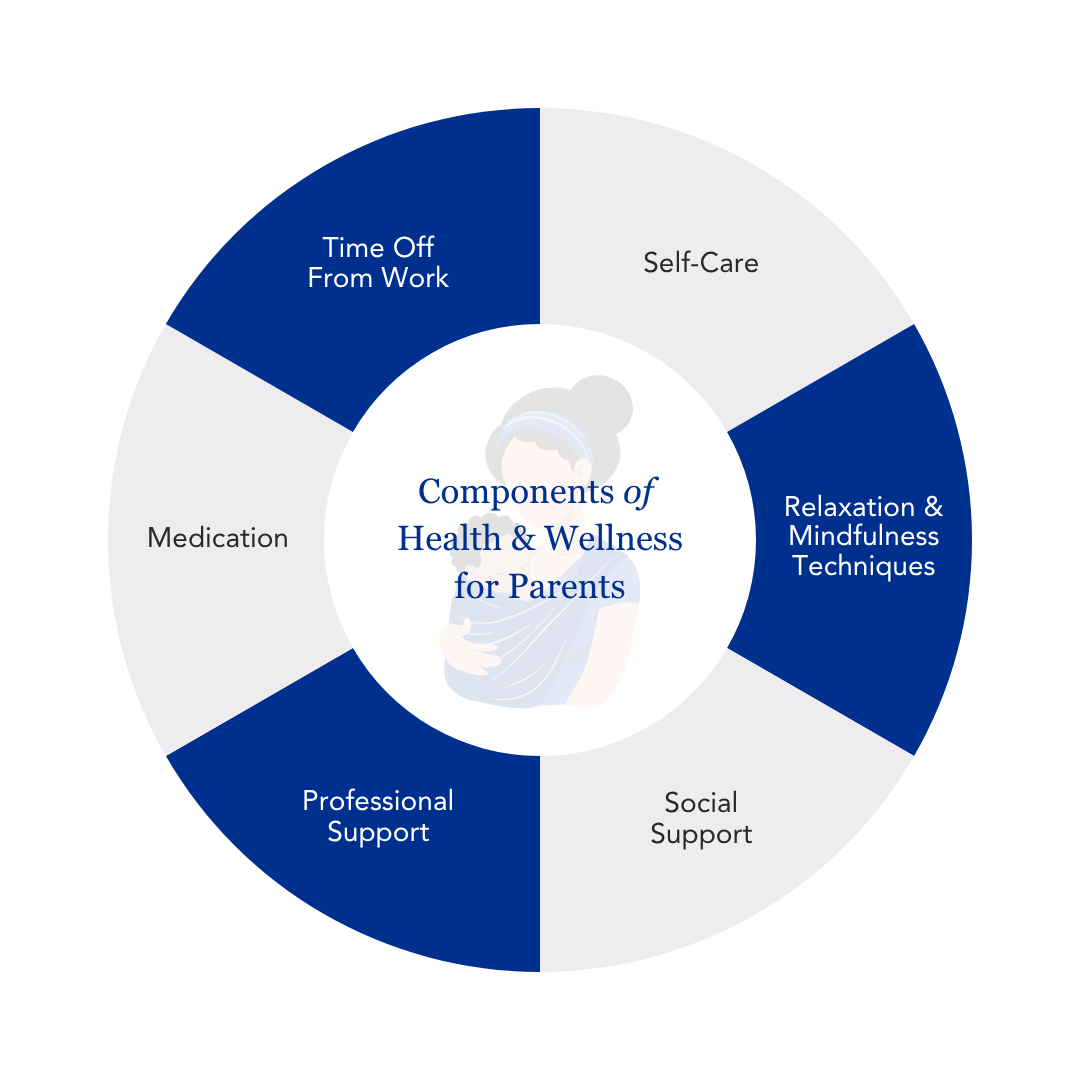
Most maternal mental health conditions are temporary and treatable. Almost all women who experience maternal mental health conditions can recover with a combination of:
Time off from work to rest and recover. [45]
Self-care, including proper nutrition and sleep, along with light exercise and time for oneself. [46, 47, 48, 49, 50]
Relaxation and mindfulness techniques, which have been shown to be helpful with stress, anxiety, and depression in pregnant and postpartum people. [51]
Social support from peers, friends, and family.
Professional support from doulas, lactation consultants, and counselors / therapists.
Medications that are safe and effective during pregnancy or while breastfeeding.
FREE Support for Pregnant and Postpartum Parents

National Maternal Mental Health Hotline
For individuals who are not in crisis but need real-time support and assistance for maternal mental health conditions.
1-833-TLC-MAMA (1-833-852-6262)
24 / 7 / 365 response within 5 minutes
Voice, text, and chat
English and Spanish
60+ languages available via translator

Postpartum Support International Helpline
For individuals who are not in crisis but need resources and referrals for maternal mental health conditions.
1-800-944-4773
FREE
30+ online support groups
Volunteer coordinators in all 50 states
Specialized coordinators for specific needs
Online directory of mental health providers
For more resources, visit our Resource Hub.
Special Thanks to Our Funders
This fact sheet was funded by grants from the California Health Care Foundation and the ZOMA Foundation.
Want more maternal mental health resources? Sign up for our newsletter.
Citations
Fawcett, E. J., Fairbrother, N., Cox, M. L., White, I. R., & Fawcett, J. M. (2019). The Prevalence of Anxiety Disorders During Pregnancy and the Postpartum Period: A Multivariate Bayesian Meta-Analysis. The Journal of Clinical Psychiatry, 80(4). https://doi.org/10.4088/JCP.18r12527
Gavin, N. I., Gaynes, B. N., Lohr, K. N., Meltzer-Brody, S., Gartlehner, G., & Swinson, T. (2005). Perinatal Depression: A Systematic Review of Prevalence and Incidence. Obstetrics and Gynecology,106(5 Part 1), 1071–1083. https://doi.org/10.1097/01.AOG.0000183597.31630.db
Pregnancy-Related Deaths: Data from Maternal Mortality Review Committees (2026). U.S. Centers for Disease Control and Prevention. https://www.cdc.gov/maternal-mortality/php/data-research/mmrc/index.html?cove-tab=1
Byatt, N., Levin, L. L., Ziedonis, D., Moore Simas, T. A., & Allison, J. (2015). Enhancing Participation in Depression Care in Outpatient Perinatal Care Settings: A Systematic Review. Obstetrics and Gynecology, 126(5), 1048–1058. https://doi.org/10.1097/AOG.0000000000001067
Luca, D. L., Margiotta, C., Staatz, C., Garlow, E., Christensen, A., & Zivin, K. (2020). Financial Toll of Untreated Perinatal Mood and Anxiety Disorders Among 2017 Births in the United States. American Journal of Public Health, 110(6), 888-896. https://doi.org/10.2105/AJPH.2020.305619
Burns, A., DeAtley, T., & Short, S. E. (2023). The maternal health of American Indian and Alaska Native people: A scoping review. Social Science & Medicine, 317, 115584. https://doi.org/10.1016/j.socscimed.2022.115584]
Du, J., & Steinberg, J. R. (2023). Stressful experiences and postpartum depressive symptoms among Asian and Pacific Islander women in the U.S.: The significance of racial discrimination. Stigma and Health, 8(1), 102–114. https://doi.org/10.1037/sah0000371
Black Women, Birthing People, and Maternal Mental Health Fact Sheet. (2023). Maternal Mental Health Leadership Alliance. https://bit.ly/blackwomen-fs
Lara-Cinisomo, S., Wood, J., & Fujimoto, E. M. (2019). A systematic review of cultural orientation and perinatal depression in Latina women: Are acculturation, Marianismo, and religiosity risks or protective factors?. Archives of Women's Mental Health, 22(5), 557–567. https://doi.org/10.1007/s00737-018-0920-4
Panchal, H. (2021). Postpartum Depression in South Asian American Mothers: An Examination of Screening Tools and Associated Cultural Factors in Assessment. Dissertations. 621. https://digitalcommons.nl.edu/cgi/viewcontent.cgi?article=1667&context=diss
Prentice, D. M., Otaibi, B. W., Stetter, C., Kunselman, A. R., & Ural, S. H. (2022). The Association Between Adverse Childhood Experiences and Postpartum Depression. Frontiers in Global Women's Health, 3, 898765. https://doi.org/10.3389/fgwh.2022.898765
Military, Veteran Women, and Maternal Mental Health Fact Sheet. (2024). Maternal Mental Health Leadership Alliance. https://bit.ly/military-fs
Birth Trauma and Maternal Mental Health Fact Sheet. (2023). Maternal Mental Health Leadership Alliance. https://bit.ly/birthtrauma-fs
Disability, Pregnancy, and Maternal Mental Health Fact Sheet. (2023). Maternal Mental Health Leadership Alliance. https://bit.ly/disability-fs
Taylor, J., Novoa, C., Hamm, K. & Phadke, S. (2019). Eliminating Racial Disparities in Maternal and Infant Mortality: A Comprehensive Policy Blueprint. Center for American Progress.https://www.americanprogress.org/article/eliminating-racial-disparities-maternal-infant-mortality/
Tahirkheli, N. N., Cherry, A. S., Tackett, A. P., McCaffree, M. A., & Gillaspy, S. R. (2014). Postpartum depression on the neonatal intensive care unit: current perspectives. International Journal of Women's Health, 6, 975–987. https://doi.org/10.2147/IJWH.S54666
Hutchens, B. F. & Kearney, J. (2020). Risk Factors for Postpartum Depression: An Umbrella Review. Journal of Midwifery & Women's Health, 65(1), 96-108. https://onlinelibrary.wiley.com/doi/10.1111/jmwh.13067
Paulson, J. L. (2020). Intimate Partner Violence and Perinatal Post-Traumatic Stress and Depression Symptoms: A Systematic Review of Findings in Longitudinal Studies. Trauma, Violence, & Abuse, 23(3), 733-747. https://doi.org/10.1177/1524838020976098
Byatt, N., Mittal, L., Brenckle, L., Logan, D., Masters, G., Bergman, A., & Moore Simas, T. (2019). Lifeline for Moms Perinatal Mental Health Toolkit. Psychiatry Information in Brief, 16(7).https://doi.org/10.7191/pib.1140
American College of Obstetricians and Gynecologists. (2023). Treatment and Management of Mental Health Conditions During Pregnancy and Postpartum. Clinical Practice Guideline Number 5. Obstetrics & Gynecology, 141(6), 1262–1288.https://doi.org/10.1097/AOG.0000000000005202
Prince, M. K., Daley, S. F., & Ayers, D. (2023). Substance Use in Pregnancy. StatPearls Publishing.https://www.ncbi.nlm.nih.gov/books/NBK542330/
Wisner, K. L., Sit, D. K. Y., McShea, M. C., Rizzo, D. M., Zoretich, R. A., Hughes, C. L., Eng, H. F., Luther, J. F., Wisniewski, S. R., Costantino, M. L., Confer, A. L., Moses-Kolko, E. L., Famy, C. S., & Hanusa, B. H. (2013). Onset Timing, Thoughts of Self-harm, and Diagnoses in Postpartum Women With Screen-Positive Depression Findings.JAMA Psychiatry, 70(5), 490–498.https://doi.org/10.1001/jamapsychiatry.2013.87
Metz T.D., Rovner P, Hoffman M.C., Allshouse A.A., Beckwith K.M., Binswanger I.A. (2016) Maternal Deaths From Suicide and Overdose in Colorado, 2004-2012. Obstetrics & Gynecology. https://pubmed.ncbi.nlm.nih.gov/27824771/
Putnick, D. L., Sundaram, R., Bell, E. M., Ghassabian, A., Goldstein, R. B., Robinson, S. L., Vafai, Y., Gilman, S. E., & Yeung, E. (2020). Trajectories of Maternal Postpartum Depressive Symptoms. Pediatrics, 146(5), e20200857.https://doi.org/10.1542/peds.2020-0857
Trifu, S., Vladuti, A., & Popescu, A. (2019). The Neuroendocrinological Aspects of Pregnancy and Postpartum Depression. Acta Endocrinol (Buchar), 15(3), 410–415.https://doi.org/10.4183/aeb.2019.410
Epifanio, M. S., Genna, V., De Luca, C., Roccella, M., & La Grutta, S. (2015). Paternal and Maternal Transition to Parenthood: The Risk of Postpartum Depression and Parenting Stress. Pediatric Reports, 7(2), 5872.https://doi.org/10.4081/pr.2015.5872
Firestein, M. R., Dumitriu, D., Marsh, R., & Monk, C. (2022). Maternal Mental Health and Infant Development During the COVID-19 Pandemic. JAMA Psychiatry, 79(10), 1040-1045.https://doi.org/10.1001/jamapsychiatry.2022.2591
Zhou, J., Ko, J. Y., Haight, S. C., & Tong, V. T. (2019). Treatment of Substance Use Disorders Among Women of Reproductive Age by Depression and Anxiety Disorder Status, 2008-2014. Journal of Women’s Health, 28(8), 1068-1076.https://doi.org/10.1089/jwh.2018.7597
Jahan, N., Went, T. R., Sultan, W., Sapkota, A., Khurshid, H., Qureshi, I. A., & Alfonso, M. (2021). Untreated Depression During Pregnancy and Its Effect on Pregnancy Outcomes: A Systematic Review. Cureus, 13(8), e17251.https://doi.org/10.7759/cureus.17251
Fitelson, E., Kim, S., Scott Baker, A., & Leight, K. (2010). Treatment of Postpartum Depression: Clinical, Psychological, and Pharmacological Options. International Journal of Women’s Health, 2011(3),1-14. https://doi.org/10.2147/IJWH.S6938
Langham, J., Gurol-Urganci, I., Muller, P., Webster, K., Tassie, E., Heslin, M., Byford, S., Khalil, A., Harris, T., Sharp, H., Pasupathy, D., van der Meulen, J., Howard, L. M., & O’Mahen, H. A. (2023). Obstetric and neonatal outcomes in pregnant women with and without a history of specialist mental health care: a national population-based cohort study using linked routinely collected data in England. The Lancet Psychiatry, 10(10), P748-759. https://doi.org/10.1016/S2215-0366(23)00200-6
Cherry, A., Mignogna, M., Roddenberry Vaz, A., Hetherington, C., McCaffree, M. A., Anderson, M., & Gillaspy, S. (2016). The Contribution of Maternal Psychological Functioning to Infant Length of Stay in the Neonatal Intensive Care Unit. International Journal of Women’s Health, 8, 233–242.https://doi.org/10.2147/IJWH.S91632
Ölmestig, T. K., Siersma, V., Birkmose, A. R., Kragstrup, J., & Ertmann, R. K. (2021). Infant Crying Problems Related to Maternal Depressive and Anxiety Symptoms During Pregnancy: A Prospective Cohort Study. BMC Pregnancy and Childbirth, 21(1), 777.https://doi.org/10.1186/s12884-021-04252-z
Mughal, M. K., Giallo, R., Arnold, P. D., Kehler, H., Bright, K., Benzies, K., Wajid, A., & Kingston, D. (2019). Trajectories of Maternal Distress and Risk of Child Developmental Delays: Findings From the All Our Families (AOF) Pregnancy Cohort. Journal of Affective Disorders, 248, 1-12.https://doi.org/10.1016/j.jad.2018.12.132
Felitti, V. J., Anda, R. F., Nordenberg, D., Williamson, D. F., Spitz, A. M., Edwards, V., Koss, M. P., & Marks, J. S. (1998). Relationship of Childhood Abuse and Household Dysfunction to Many of the Leading Causes of Death in Adults: The Adverse Childhood Experiences (ACE) Study. American Journal of Preventative Medicine, 14(4), 245-58.https://doi.org/10.1016/s0749-3797(98)00017-8
Field, T. (2010). Postpartum Depression Effects on Early Interactions, Parenting, and Safety Practices: A Review. Infant and Behavior Development, 33(1),1-6.https://doi.org/10.1016/j.infbeh.2009.10.005
Sriraman, N. K., Pham, D.-Q., & Kumar, R. (2017). Postpartum Depression: What Do Pediatricians Need to Know? Pediatrics in Review, 38(12), 541-551.https://doi.org/10.1542/pir.2015-0133
MacDorman, M. F., Thoma, M., Declcerq, E., & Howell, E. A. (2021). Racial and Ethnic Disparities in Maternal Mortality in the United States Using Enhanced Vital Records, 2016‒2017. American Journal of Public Health, 111(9), 1673-1681.https://doi.org/10.2105/AJPH.2021.306375
Chambers, B. D., Taylor, B., Nelson, T., Harrison, J., Bell, A., O’Leary, A., Arega, H. A., Hashemi, S., McKenzie-Sampson, S., Scott, K. A., Raine-Bennett, T., Jackson, A. V., Kuppermann, M., & McLemore, M. R. (2022). Clinicians' Perspectives on Racism and Black Women's Maternal Health. Women's Health Reports, 3(1), 476–482.https://doi.org/10.1089/whr.2021.0148
Da Costa, D., Danieli, C., Abrahamowicz, M., Dasgupta, K., Sewitch, M., Lowensteyn, I., & Zelkowitz, P. (2019). A Prospective Study of Postnatal Depressive Symptoms and Associated Risk Factors in First-time Fathers. Journal of Affective Disorders, 249, 371-377.https://doi.org/10.1016/j.jad.2019.02.033
Foli, K.J. (2021). Understanding Parental Postadoption Depression. Adoption Advocate, 158, 1-12. https://adoptioncouncil.org/wp-content/uploads/2021/08/Adoption-Advocate-No.-158.pdf
Hansotte, E., Payne, S.I. & Babich, S.M. (2017). Positive postpartum depression screening practices and subsequent mental health treatment for low-income women in Western countries: a systematic literature review. Public Health Reviews, 38(1), 3. https://doi.org/10.1186/s40985-017-0050-y
Dwarakanath, M., Hossain, F., Balascio, P., Moore, M. C., Hill, A. V., & De Genna, N. M. (2023). Experiences of postpartum mental health sequelae among black and biracial women during the COVID-19 pandemic. BMC Pregnancy and Childbirth, 23(1), 636.https://doi.org/10.1186/s12884-023-05929-3
Heslehurst, N., Brown, H., Pemu, A., Coleman, H., & Rankin, J. (2018). Perinatal health outcomes and care among asylum seekers and refugees: a systematic review of systematic reviews. BMC Medicine, 16(1), 89.https://doi.org/10.1186/s12916-018-1064-0
Parental Leave Brings Mental Health Benefits, Especially for Mothers. (2023). American Psychiatric Association. https://www.psychiatry.org/news-room/apablogs/parental-leave-mental-health-benefits
Leistikow, N., & Smith, M. H. (2024). The role of sleep protection in preventing and treating postpartum depression. Seminars in Perinatology, 48(6), 151947. https://doi.org/10.1016/j.semperi.2024.151947
Yuan, M., Chen, H., Chen, D., Wan, D., Luo, F., Zhang, C., Nan, Y., Bi, X., & Liang, J. (2022). Effect of physical activity on prevention of postpartum depression: A doseresponse meta-analysis of 186,412 women. Frontiers in Psychiatry, 13, 984677. https://doi.org/10.3389/fpsyt.2022.984677
Maternal Diet and Breastfeeding. (2024). Centers for Disease Control and Prevention. https://www.cdc.gov/breastfeeding-special-circumstances/hcp/dietmicronutrients/maternal-diet.html
Pregnancy and Breastfeeding. (n.d.). MyPlate.gov. https://www.myplate.gov/life-stages/pregnancy-andbreastfeeding
Hoffert Gillmartin, A. B. (2024). Is it OK to need a break from my kids? HealthyChildren.org. https://www.healthychildren.org/English/tips-tools/ask-thepediatrician/Pages/is-it-ok-to-need-a-break-from-my-kids.aspx
Ash, T. (2021). 12 benefits of mindfulness for mental and physical health. Ro. https://ro.co/health-guide/12-benefits-of-mindfulness/